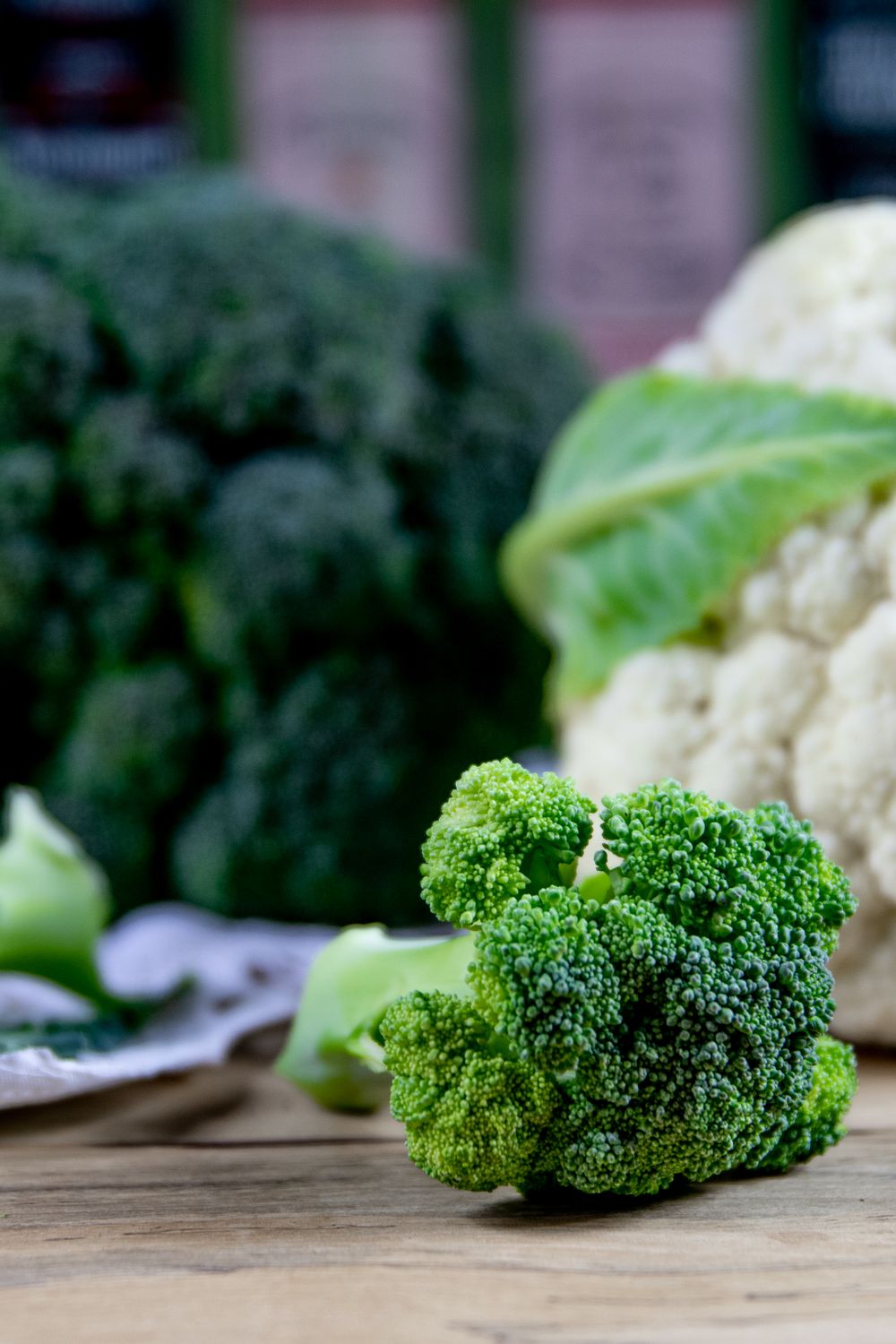
The short answer
Vegetables like broccoli and beans contain sugars your small intestine can't digest. Gut bacteria ferment them in your colon, producing gas — that's the bloating. It's adaptation, not intolerance: a controlled study found 80% of symptoms faded back to near-baseline by week 6 of higher fiber intake.
It feels like a betrayal. You cut back on the processed stuff, loaded your plate with broccoli and lentils, and your stomach responded by inflating like it's personally offended.
It isn't offended. It's working. The bloating is a real, physical, measurable process — and understanding what's actually happening makes it a lot easier to push through instead of quietly going back to white rice.
Why does eating more vegetables cause bloating?
The short version: some of what you're eating literally cannot be digested by you. It has to be digested by something else.
Vegetables — cruciferous ones especially — contain complex sugars that human digestive enzymes can't break down. That undigested material travels all the way to your large intestine, where it meets trillions of bacteria that can break it down. They do, and gas is the byproduct.
What is actually happening in your gut?
The main sugar responsible is called raffinose, found in broccoli, cabbage, cauliflower, Brussels sprouts, and legumes like beans and lentils. Humans lack the enzyme needed to break it down in the small intestine, so it arrives in the colon intact.
There, resident bacteria ferment it — and fermentation, by its nature, produces gas. A foundational review in the Journal of Gastroenterology and Hepatology describes exactly this process: fermentable, poorly absorbed short-chain carbohydrates delivering water and gas to the colon, distending it, and producing the physical sensation of bloating.
This is the same basic mechanism behind the well-known "FODMAP" framework used in digestive medicine — Fermentable Oligosaccharides, Disaccharides, Monosaccharides, and Polyols. Raffinose is one member of that family.
None of this means something is wrong with you. It means your gut bacteria are being asked to do more work than they're currently staffed for.
Does the bloating actually go away, or is this just how vegetables feel forever?
It goes away for most people — and this has been measured directly, not just assumed.
A 2024 study published in Gut Microbes tracked adults as they increased their intake of a fermentable fiber (arabinoxylan) to a therapeutic dose over six weeks.
Share of participants whose gas and bloating symptom ratings had returned to near their starting baseline by week 6, after rising during the first three weeks. Symptoms in weeks 4–6 were significantly lower than weeks 1–3.
Deehan et al., Gut Microbes, 2024 (n=31 completers)Your gut microbiome isn't fixed. It responds to what you feed it, and bacteria capable of efficiently handling fermentable fiber increase in number the more consistently you eat it. The bloating you feel in week one is largely a staffing problem your gut solves on its own, given a few weeks.
Which vegetables cause the most bloating?
In rough order, based on raffinose and total fermentable fiber content:
- Highest: Brussels sprouts, cabbage, broccoli, cauliflower, beans, lentils, chickpeas
- Moderate: onions, garlic, asparagus, kale
- Lower: carrots, cucumbers, zucchini, leafy greens like spinach and lettuce
Notice something: the "worst offenders" list overlaps almost exactly with the highest-fiber, most nutrient-dense vegetables on the planet — and with the legumes we recommend constantly in our fiber guide and protein guide. The foods causing the temporary discomfort are the same ones doing the most good.
How do you prevent the bloating without giving up the vegetables?
1. Go slow. Add roughly 5 grams of fiber per week rather than switching your whole diet overnight. This is the same pacing we recommend for fiber generally — your gut bacteria need time, not a single heroic salad.
2. Cook instead of eating raw. Cooking breaks down some of the fermentable sugars before they ever reach your gut, which is why cooked broccoli is typically gentler than raw.
3. Drink more water as you add fiber. Fiber needs water to move through your system properly; without it, you get the opposite of relief.
4. Eat smaller portions of anything new. A cup of lentils for the first time is a bigger ask than a half cup twice this week and a full cup next week.
Chewing thoroughly helps too — mechanical breakdown in your mouth means your gut bacteria have less work to do later.
Where supplements fit
Give your gut time first — here's our honest take on the rest
Readers ask whether a supplement can ease the digestive discomfort that comes with eating more produce. SLIMTIDE is a daily supplement marketed to support appetite control, digestive comfort, and everyday energy alongside a healthy diet.
Might make sense if
- You're already increasing fiber gradually and staying hydrated
- You want extra daily support and your doctor has cleared the label
Skip it if
- You just jumped your fiber intake overnight — pace it instead
- You're pregnant, nursing, or on medication (talk to your doctor first)
- You want it to work overnight — give it the full 30 to 60 days
Affiliate link — we may earn a commission at no cost to you. Full disclosure.
Should you just stop eating the vegetables that bloat you?
No — and this is the part worth being direct about.
Stopping doesn't just remove the discomfort. It removes the fiber that's doing real work for your fullness, your blood sugar, and your gut bacteria, and it prevents the very adaptation that would have resolved the bloating within weeks. Quitting at week one guarantees you never reach week six.
Slow the increase down. Don't reverse it — unless a doctor has specifically identified a condition that requires a different approach, which is a real possibility for some people and is covered next.
When is this bloating a sign of something more serious?
Bloating is severe rather than mild. It doesn't improve after several weeks of a genuinely gradual increase. It comes with real pain, unintended weight loss, blood in your stool, or a persistent change in bowel habits. Those patterns go beyond normal dietary adjustment and can indicate a condition like IBS or an intolerance that benefits from a proper evaluation — for example, a structured low-FODMAP approach done with a doctor or dietitian, not a self-guided one.
Frequently asked questions
Why do I get bloated when I eat more vegetables?
Many vegetables contain raffinose, a sugar the small intestine can't digest. It passes to the large intestine, where gut bacteria ferment it and produce gas — that gas is the bloating. It's a digestion process, not an intolerance or allergy.
Does the bloating from eating more vegetables go away?
For most people, yes. In a controlled study, symptoms rose for three weeks, then declined — by week 6, 80% of participants had returned to near their starting baseline as gut bacteria adapted to the higher fiber intake.
Which vegetables cause the most gas and bloating?
Cruciferous vegetables (broccoli, cauliflower, cabbage, Brussels sprouts) and legumes (beans, lentils, chickpeas) top the list, since they're highest in raffinose and fermentable fiber. Onions and garlic contribute for some people too.
How can I eat more vegetables without so much bloating?
Increase intake gradually — about 5 g of fiber per week — drink more water, and cook vegetables rather than eating them raw, since cooking breaks down some fermentable sugars beforehand. Smaller portions of new high-fiber foods and thorough chewing help too.
Should I stop eating vegetables if they make me bloated?
No. Stopping removes fiber your body needs and prevents the gut adaptation that resolves the bloating within weeks. Slow the increase instead of reversing it, unless a doctor has diagnosed a specific condition requiring a different approach.
When is vegetable-related bloating a sign of something more serious?
See a doctor if bloating is severe, doesn't improve after weeks of a gradual increase, or comes with pain, unintended weight loss, blood in your stool, or persistent changes in bowel habits — those warrant a proper evaluation.
Sources
- Deehan EC, Zhang Z, Nguyen NK, et al. "Adaptation to tolerate high doses of arabinoxylan is associated with fecal levels of Bifidobacterium longum." Gut Microbes, 2024;16(1). pmc.ncbi.nlm.nih.gov/articles/PMC11174067
- Gibson PR, Shepherd SJ. "Evidence-based dietary management of functional gastrointestinal symptoms: The FODMAP approach." Journal of Gastroenterology and Hepatology, 2010;25(2):252–258. onlinelibrary.wiley.com
- Mayo Clinic. "Dietary fiber: Essential for a healthy diet." mayoclinic.org
This article is for general information and education only. It is not medical advice, diagnosis, or treatment. Persistent, severe, or worsening digestive symptoms — especially with pain, weight loss, or blood in the stool — should be evaluated by a doctor. Always talk to your doctor, registered dietitian, or pharmacist before changing your diet or starting any supplement, especially if you have a diagnosed digestive condition such as IBS.
These statements have not been evaluated by the Food and Drug Administration. Any product mentioned is not intended to diagnose, treat, cure, or prevent any disease.