The short answer
To lose weight without constant hunger, build every meal around protein, fiber, and high-volume whole foods, and protect your sleep. These four levers lower appetite hormones and slow digestion, so you naturally eat less without counting every calorie or fighting your own biology.
Here's the part almost nobody says out loud: hunger is the reason diets fail. Not a lack of motivation. Not a missing "secret." Hunger.
You can white-knuckle your way through three days of undereating. Maybe three weeks. But your body is running a very old program, and that program does not care about your goal weight. It cares about keeping you alive. Eat too little, too fast, with the wrong foods, and it will turn up the hunger dial until you cave — usually at 9 p.m., usually in front of the pantry.
The way out isn't more willpower. It's building meals your body reads as enough. That's what this guide is about.
Why does dieting make you so hungry?
When you cut calories, your body notices within days. Levels of ghrelin — the hormone that tells your brain to go find food — climb. Levels of leptin, which signals that you have plenty of stored energy, fall. Your brain gets a two-part message: find food, and stop burning so much of it.
This is normal. It is not a personal defect. It's the same system that kept your great-grandparents alive through a bad winter.
The mistake most people make is trying to out-discipline that system. The better move is to work with it — because the hunger dial isn't only turned by how much you eat. It's turned by what you eat, how you eat it, and how well you sleep.
Consider what happens when food itself is engineered to be easy to overeat. In a tightly controlled trial at the National Institutes of Health, 20 adults lived in a metabolic ward and were fed either ultra-processed or unprocessed meals — matched for calories, sugar, fat, fiber, and salt — and told to eat as much as they wanted.
Extra calories per day people ate on the ultra-processed diet compared to the unprocessed diet — despite the meals being matched for nutrients. They gained about 2 lbs in two weeks, then lost it on the unprocessed diet.
Hall et al., Cell Metabolism, 2019 (NIH inpatient randomized trial)Same calories on offer. Same macros. Half a day's worth of extra food eaten anyway. The food itself changed how much they needed to feel done.
What actually makes a meal filling?
Fullness isn't one signal. It's four, and they stack:
- Protein — triggers the strongest release of fullness hormones (GLP-1, PYY, CCK) of any macronutrient.
- Fiber — slows how fast your stomach empties and feeds the gut bacteria that produce more satiety signals.
- Volume & water — stretch receptors in your stomach wall report "full" based partly on physical size, not calories.
- Chewing time — fullness hormones need roughly 20 minutes to reach your brain. Food you have to work at buys that time.
Here's the uncomfortable truth: ultra-processed food is specifically optimized to defeat all four. It's low in protein and fiber, calorie-dense in a small volume, and soft enough to swallow in seconds. A 600-calorie muffin takes ninety seconds to eat and registers as almost nothing.
A 600-calorie plate of chicken, beans, roasted vegetables, and olive oil takes twenty minutes to eat and will hold you for four hours. Same calories. Completely different experience.
This is the clearest single illustration of the whole principle: a bag of chips and a bag of apples do completely different things to the same appetite. We break down exactly why in why chips are so easy to overeat.
How much protein do you actually need to feel full?
This is the single highest-leverage change most people can make, and there's a clean piece of research behind it.
At the University of Washington, researchers put participants on a diet where protein was raised from 15% to 30% of calories while carbohydrates stayed constant. Fat was reduced to keep calories even. After a two-week controlled phase, participants were then allowed to eat as much as they wanted for 12 weeks.
Calories per day that people spontaneously stopped eating once protein was raised to 30% of intake. Nobody told them to restrict. They just weren't as hungry. Over 12 weeks they lost 4.9 kg (about 11 lbs), including 3.7 kg of fat.
Weigle et al., American Journal of Clinical Nutrition, 2005That is the whole ballgame in one number. They didn't diet harder. They ate more protein and the hunger got quieter.
What that looks like on a plate
Forget percentages at the grocery store. Use this instead: aim for 25–40 grams of protein at every main meal. That's roughly:
| Food | Serving | Protein |
|---|---|---|
| Chicken breast | 4 oz / 113 g | ~35 g |
| Greek yogurt (plain, 0%) | 1 cup | ~20–23 g |
| Eggs | 3 large | ~19 g |
| Canned tuna or salmon | 1 can, drained | ~22–25 g |
| Lentils, cooked | 1 cup | ~18 g (+ 15 g fiber) |
| Cottage cheese | 1 cup | ~24 g |
| Tofu, firm | 1 cup | ~20 g |
Protein values are approximate and vary by cut, brand, and preparation. Figures are consistent with USDA FoodData Central.
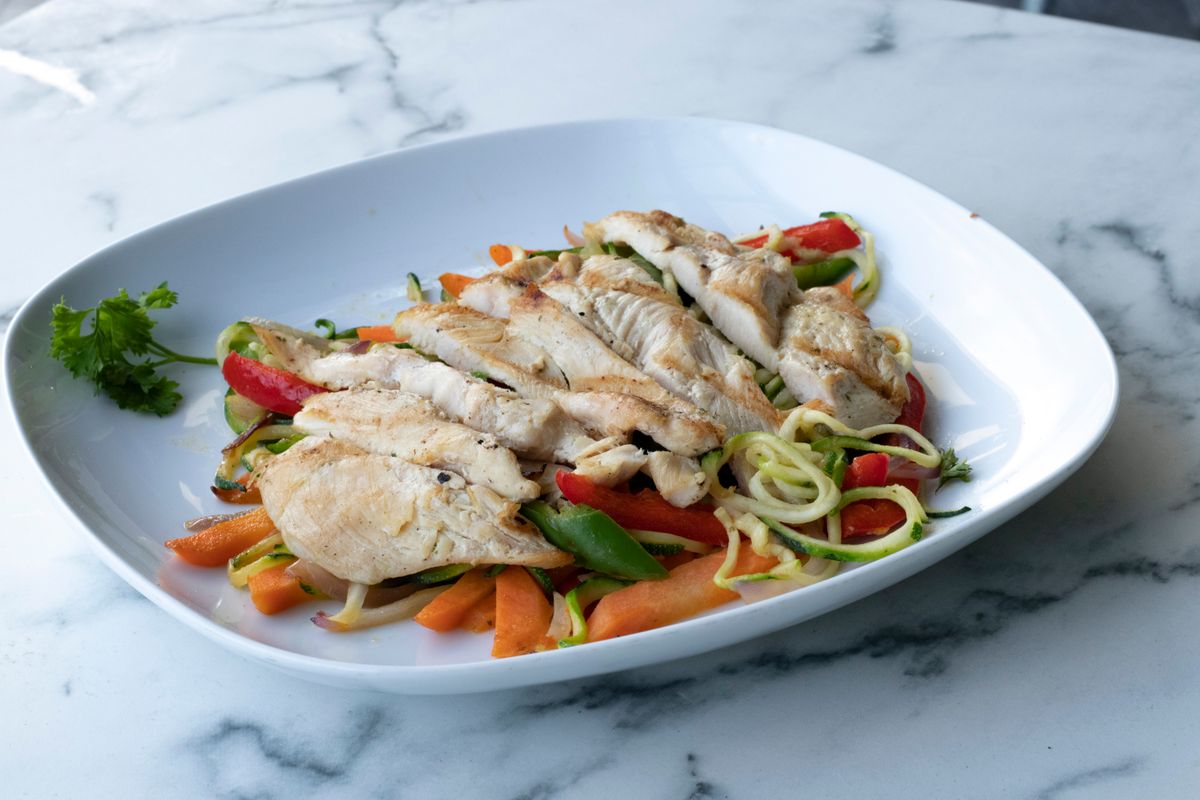
The most common failure point is breakfast. A bagel, a bowl of cereal, or a coffee-and-nothing start the day at near-zero protein — and you spend the rest of the day chasing hunger you created before 8 a.m.
We break the protein question down properly here — daily targets by body weight, per-meal amounts, and the point where more protein stops helping: How Much Protein Do You Need to Lose Weight?
Want to go deeper on the hunger side of this? Read our companion guide: Why Am I Always Hungry? 7 Reasons You Never Feel Full.
Why is fiber the most underrated weight-loss tool?
Protein gets all the attention. Fiber quietly does half the work.
Most American adults eat around 15 grams of fiber a day. The Mayo Clinic's recommendation is 21–25 g for women and 30–38 g for men. That's a gap of roughly half the target, in a nutrient that directly controls how full you feel.
The most striking evidence comes from a 12-month randomized trial in Annals of Internal Medicine. Researchers took 240 adults with metabolic syndrome and split them into two groups. One group followed a complex American Heart Association diet with multiple targets. The other group got one single instruction: eat at least 30 grams of fiber a day. That's it.
Average weight lost over 12 months by the group that only had to hit 30 g of fiber daily — compared with 2.7 kg in the group following the far more complicated AHA diet. One rule got most of the result.
Ma et al., Annals of Internal Medicine, 2015 (randomized trial, n=240)Read that again. A single, simple, positive instruction — add this, not cut that — delivered nearly the same 12-month weight loss as a multi-part diet plan. Because when you're eating 30 grams of fiber, there physically isn't much room left for the junk.
Jumping from 15 g to 35 g overnight is a recipe for gas and bloating. Add about 5 grams per week, and increase your water at the same time — fiber needs water to do its job comfortably.
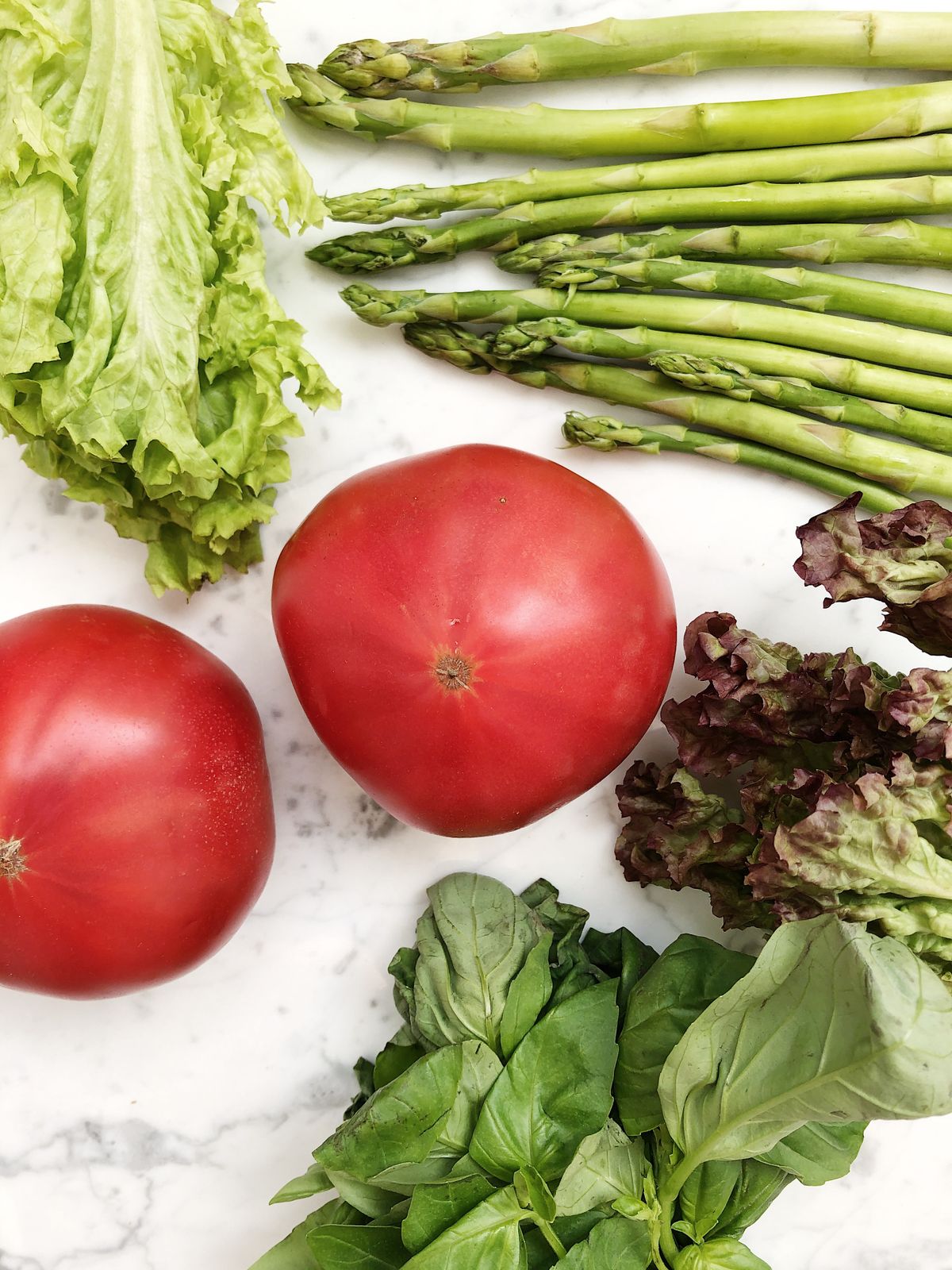
We break the whole thing down here: Fiber for Weight Loss: How Much You Need to Actually Feel Full.
What does digestion have to do with weight loss?
More than most people realize. Digestion is the pace at which food becomes signals.
When a meal leaves your stomach quickly — as refined carbs do — the fullness window slams shut fast. When it leaves slowly, your gut has time to release GLP-1 and PYY, the hormones that tell your brain to stop eating. (These are, not coincidentally, the same pathways that modern weight-loss drugs target.)
Three practical levers slow that pace down:
- Eat protein and vegetables before the starch. Same meal, different order, gentler blood sugar response.
- Drink water before eating. In a 12-week trial in the journal Obesity, adults who drank 500 mL of water before each meal lost significantly more weight than those on the same diet who didn't — though the effect is strongest in older adults. See our full breakdown of the evidence.
- Feed your gut bacteria. Fiber that reaches your colon gets fermented into short-chain fatty acids, which appear to support appetite regulation from the inside out.
If digestion feels sluggish, bloated, or unpredictable, that's worth addressing on its own — not because bloating is fat, but because a gut under stress makes eating well feel miserable, and misery is what ends diets. If the bloating started right when you added more vegetables, see Why Do I Feel Bloated When I Eat More Vegetables? — it's usually adaptation, not a problem. And if bloating and low energy show up together on a regular basis, we built a full framework for sorting out why in Why Do I Feel Bloated and Tired All the Time?
Why do you crash at 3 p.m. — and does it matter for weight?
It matters enormously, because the 3 p.m. crash is a decision-making event.
A breakfast of refined carbs sends blood sugar up fast, insulin follows, and blood sugar drops below where it started. Your brain reads that dip as an emergency and asks for the fastest fuel available: sugar. Now you're standing in front of the vending machine at 3:15, and you're not choosing with the same brain you had at 9 a.m.
Steady energy isn't a bonus feature of eating well. It's the mechanism that makes the next good decision possible.
- Anchor breakfast with 25–30 g of protein.
- Pair any carbohydrate with protein, fat, or fiber — never eat it naked.
- Take a 10-minute walk after your largest meal. It measurably blunts the post-meal blood sugar rise.
- Check your caffeine timing. Coffee after 2 p.m. borrows energy from tonight's sleep — and tonight's sleep is tomorrow's appetite.
If your energy reliably tanks in the mid-afternoon, that's usually blood sugar, not fate — see Why Do I Get Hungry and Tired at 3 p.m. Every Day? for the mechanism and the fix.

How does sleep quietly control your appetite?
You can do everything right at the table and have it undone in bed.
Researchers at the University of Chicago ran a controlled study where overweight adults ate an identical calorie-restricted diet for two weeks — once while sleeping 8.5 hours a night, and once while sleeping only 5.5 hours.
Reduction in the proportion of weight lost as fat when sleep was cut from 8.5 to 5.5 hours on the exact same diet. Total weight loss was similar — but the short-sleep group lost far more muscle instead of fat, and reported feeling hungrier.
Nedeltcheva et al., Annals of Internal Medicine, 2010Same food. Same deficit. Radically different body composition — plus more hunger. Short sleep raises ghrelin, lowers leptin, and hands your appetite the steering wheel.
If you're sleeping five hours and wondering why you can't stop snacking, you already have your answer. Sleep is not the thing you do after the health stuff. Sleep is the health stuff.
If this is your pattern, we go deeper on the hormones behind it here: Why Am I So Hungry After a Bad Night's Sleep?

What does a full day of "full" actually look like?
Here's the framework applied. Not a rigid meal plan — a shape you can repeat with whatever food you actually like.
| Meal | The shape | Example | Why it holds |
|---|---|---|---|
| Breakfast | 30 g protein + fiber | Greek yogurt, berries, chia, walnuts | Kills the 11 a.m. cliff before it starts |
| Lunch | Protein + big volume | Chicken over a large salad, olive oil, beans | Volume plus protein = no 3 p.m. crash |
| Snack (if hungry) | Protein-led, not carb-led | Cottage cheese and an apple | Bridges to dinner without a sugar spike |
| Dinner | Protein + 2 vegetables + a starch | Salmon, roasted broccoli, quinoa | Satisfying enough that 9 p.m. stays quiet |
Notice what's missing: nothing is banned. There's no forbidden food list, no "clean eating" purity test, no 14-day cleanse. The plate is built so that the hunger never gets loud enough to need one.
And no bottle either. If you're weighing whether a capsule could do some of this work for you, we went through every major appetite ingredient and what its trials actually found in do appetite suppressant supplements work? — the short version is that the dose in your bottle is almost never the dose in the study.
Product we're asked about
Where a supplement like SLIMTIDE fits — honestly
Readers ask us constantly whether a supplement can help with the appetite and digestion side of this. Here is our straight answer, and we'd rather lose the sale than oversell it.
It may make sense if
- You've already got the basics running — protein, fiber, sleep — and want extra support on the margins
- You want a daily routine anchor that keeps you engaged with your plan
- You've checked the label with your doctor and there are no interactions
Skip it if
- You want it to work overnight — give it the full 30 to 60 days
- You're pregnant, nursing, or taking prescription medication (talk to your doctor first)
- You're expecting fast or guaranteed results — nobody can promise you those
- Your budget is better spent on groceries. Genuinely. Food first.
Affiliate link — we may earn a commission at no cost to you. Full disclosure.
What's the simplest way to start this week?
Don't do all of it. Do the first two, for seven days.
- Add 30 g of protein to breakfast. Eggs, Greek yogurt, or cottage cheese. Change nothing else about your day.
- Add one fiber source to lunch and dinner. A cup of beans, lentils, or a large side of vegetables.
- Drink a glass of water before each meal. Free, easy, backed by a randomized trial.
- Set a bedtime alarm — not a wake alarm. Aim for seven hours minimum.
- Walk 10 minutes after your biggest meal.
That's it. No app, no macros spreadsheet, no restriction. Most people report the hunger noise dropping within a week or two — and that's when weight loss stops feeling like a fight and starts feeling like a byproduct.
Frequently asked questions
Can you really lose weight without feeling hungry?
You can lose weight without being constantly, distractingly hungry — but mild hunger before meals is normal and expected. The goal isn't zero hunger; it's preventing the ravenous, out-of-control hunger that drives overeating. Protein, fiber, high-volume whole foods, and adequate sleep all lower appetite signals while you're in a deficit.
How much protein do I need to feel full?
Satiety research commonly uses about 25–30% of daily calories from protein. In practice, aim for 25–40 g at each main meal. In the University of Washington trial cited above, raising protein from 15% to 30% of calories led people to spontaneously eat about 441 fewer calories a day — without being told to restrict anything.
Does fiber actually help with weight loss?
Yes. Fiber slows digestion, adds volume without calories, and feeds gut bacteria. In a 12-month randomized trial in Annals of Internal Medicine, people told only to eat 30 g of fiber daily lost an average of 2.1 kg — nearly matching a group on a far more complex American Heart Association diet, which lost 2.7 kg.
Why am I hungry again an hour after eating?
Usually one of four things: the meal was low in protein and fiber; it was built on refined carbs that spiked and dropped your blood sugar; you ate too fast for fullness hormones to register (they need ~20 minutes); or you're short on sleep. Fix the composition of the meal and the rebound hunger usually fixes itself.
Do weight loss supplements like SLIMTIDE work?
No supplement replaces protein, fiber, sleep, and an overall calorie deficit. Products marketed for appetite and digestion support are best understood as a possible small nudge on top of those habits — never a substitute. Talk to your doctor before starting any supplement, particularly if you're pregnant, nursing, on medication, or managing a health condition.
How long before I stop feeling hungry all the time?
Most people notice a meaningful drop in appetite within one to two weeks of consistently raising protein and fiber and sleeping adequately. Your digestive system needs a couple of weeks to adjust to more fiber, which is why you should add it gradually — about 5 g per week — with more water.
Sources
- Weigle DS, et al. "A high-protein diet induces sustained reductions in appetite, ad libitum caloric intake, and body weight despite compensatory changes in diurnal plasma leptin and ghrelin concentrations." American Journal of Clinical Nutrition, 2005;82(1):41–48. pubmed.ncbi.nlm.nih.gov/16002798
- Ma Y, et al. "Single-Component Versus Multicomponent Dietary Goals for the Metabolic Syndrome: A Randomized Trial." Annals of Internal Medicine, 2015;162(4):248–257. pubmed.ncbi.nlm.nih.gov/25686165
- Hall KD, et al. "Ultra-Processed Diets Cause Excess Calorie Intake and Weight Gain: An Inpatient Randomized Controlled Trial of Ad Libitum Food Intake." Cell Metabolism, 2019;30(1):67–77. pubmed.ncbi.nlm.nih.gov/31105044
- Nedeltcheva AV, et al. "Insufficient sleep undermines dietary efforts to reduce adiposity." Annals of Internal Medicine, 2010;153(7):435–441. pubmed.ncbi.nlm.nih.gov/20921542
- Dennis EA, et al. "Water consumption increases weight loss during a hypocaloric diet intervention in middle-aged and older adults." Obesity, 2010;18(2):300–307. pubmed.ncbi.nlm.nih.gov/19661958
- Mayo Clinic. "Dietary fiber: Essential for a healthy diet." mayoclinic.org
This article is for general information and education only. It is not medical advice, diagnosis, or treatment, and it is not a substitute for the judgment of a qualified healthcare provider who knows your history. Always talk to your doctor, registered dietitian, or pharmacist before changing your diet or starting any supplement — especially if you are pregnant or nursing, taking medication, or living with a medical condition.
These statements have not been evaluated by the Food and Drug Administration. Any product mentioned is not intended to diagnose, treat, cure, or prevent any disease.