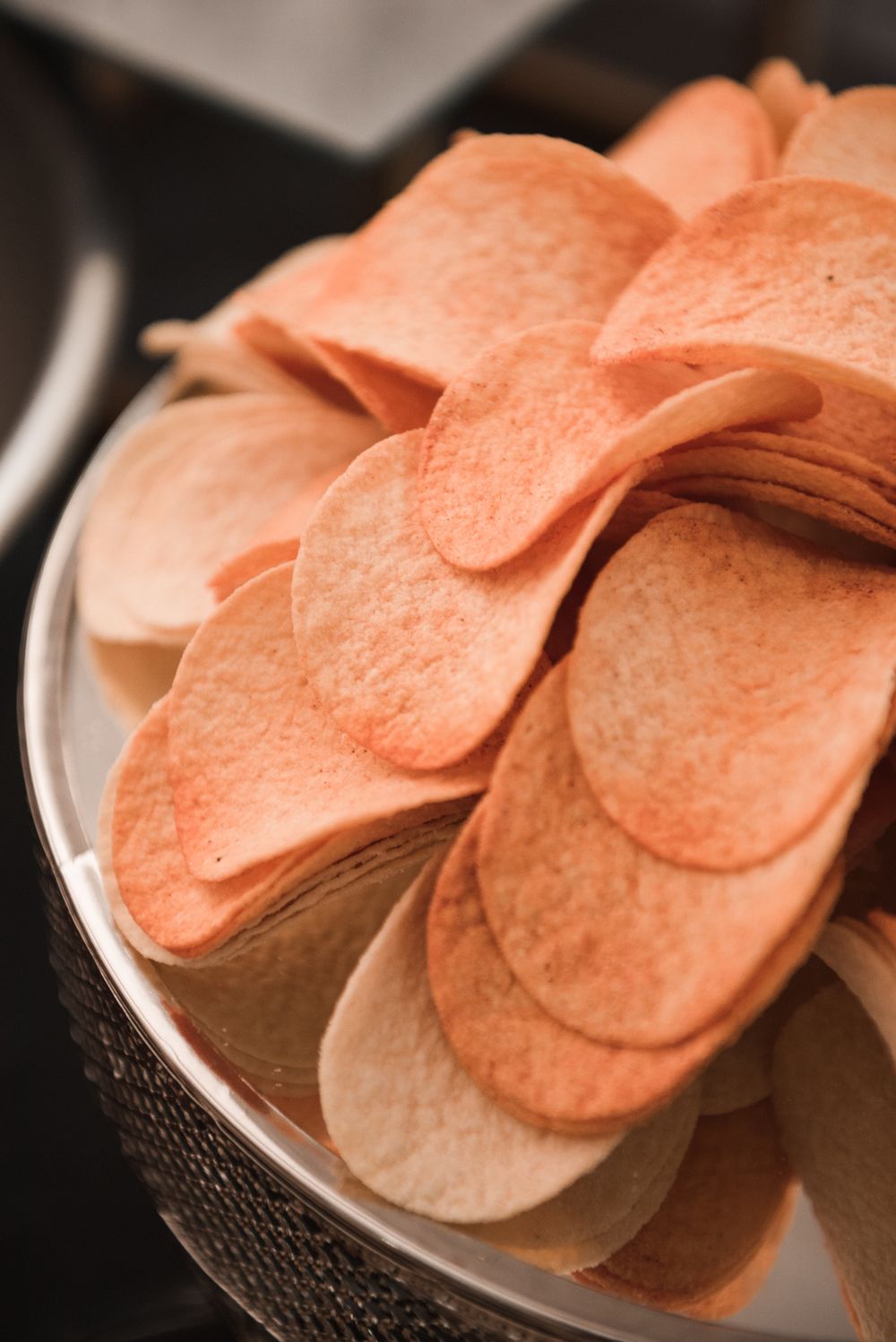
The short answer
Because chips carry about ten times the calories per gram that apples do, and you chew them far faster. Your body tracks the volume of food it eats more tightly than the calories. A bag of chips slips past that system; a bag of apples fills you up first.
Nobody has ever finished a whole bag of apples by accident. It happens with chips constantly — often while doing something else, often without noticing the bag was even close to empty.
The usual explanation is that chips are addictive and you should try harder. That framing is both discouraging and largely wrong. Two specific, measurable properties of the food explain most of what's going on.
Why does a bag of chips disappear so fast?
Your appetite system is better at tracking how much food you've eaten than how many calories came with it. Researchers call this calorie or energy density — calories packed into each gram of food — and it turns out to be one of the strongest predictors of how much people eat.
A study at Penn State tested this head-on. Eighteen women ate freely from meals that looked and tasted alike but were quietly built at three different calorie densities, over multiple days in a controlled setting.
Extra calories per day eaten on the high-density menu versus the low-density one — 1,800 vs 1,376 — even though participants ate a similar weight of food and reported no difference in hunger or fullness.
Bell, Castellanos, Pelkman, Thorwart & Rolls, American Journal of Clinical Nutrition, 1998Read that last part again, because it's the whole story: they didn't feel any hungrier, and they didn't feel any less full. They ate the same amount of food. The calories changed anyway, silently.
That's what a bag of chips does. It doesn't overwhelm your appetite system. It sails right past it.
How much food is actually in a bag of chips versus a bag of apples?
The comparison gets clearer with real numbers. According to the USDA's food composition database, potato chips run about 536 calories per 100 grams. Raw apples with the skin on run about 52 calories per 100 grams — and are roughly 86% water by weight.
That's a tenfold difference in what each gram delivers. Play it out at snack scale:
- A large 8-ounce bag of chips holds about 226 grams — roughly 1,200 calories.
- Eating that many calories as raw apples would take about 2.3 kilograms of fruit.
- At roughly 180 grams per medium apple, that's around 13 apples, one after another.
Nobody eats 13 apples. Your stomach physically objects somewhere around the third one. The apples aren't showing more restraint than the chips — they're just ten times heavier for the same energy.
Why does crunch make you eat faster?
Calorie density is half the answer. The other half is how long the food stays in your mouth.
Fullness signals are slow. Hormones released from the gut take time to reach the brain, so how fast you eat determines how much food gets in before those signals arrive. Food texture sets that pace more than most people realize.
Calorie gap between the same people eating a hard, minimally processed meal (482.9 kcal) and a soft, ultra-processed one (789.4 kcal) — driven largely by how quickly each meal could be chewed and swallowed.
Teo, Lim, Goh, Janani, Choy, McCrickerd & Forde, American Journal of Clinical Nutrition, 2022 (n=50)Here's the part that surprises people: chips are crunchy, but that crunch is over instantly. A potato chip shatters on the first bite and then essentially dissolves. There's nothing left to work on.
An apple is the opposite. It stays hard through dozens of chews. Every one of those chews is time your gut is using to send signals up to your brain.
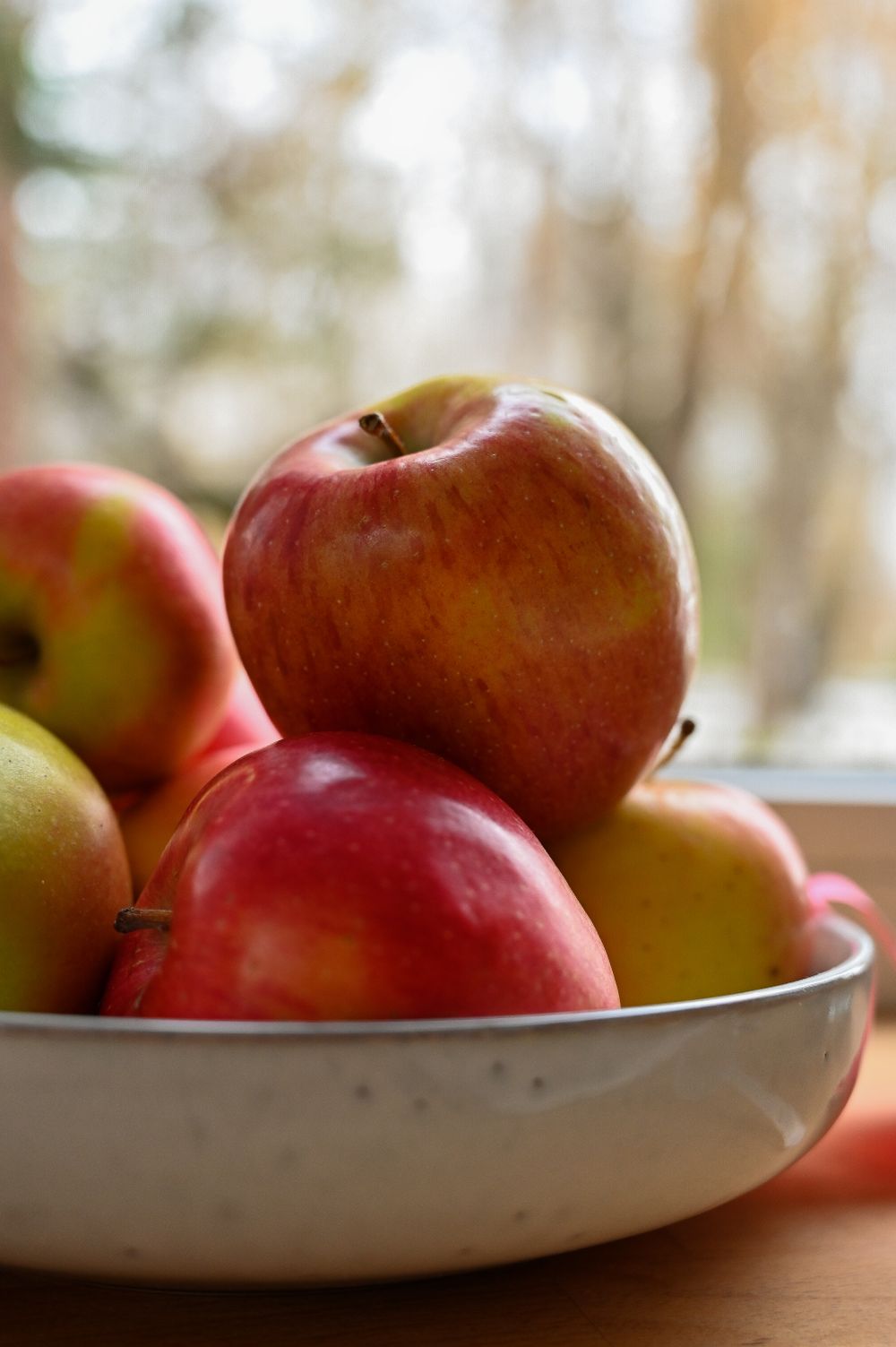
Loud and crunchy isn't the issue. Crunchy for only one bite is.
What makes chips "hyper-palatable"?
There's a third factor, and it isn't accidental. Researchers at the University of Kansas built a numeric definition for what makes certain foods unusually hard to stop eating, then ran the entire US food database against it.
They found three combinations that show up over and over: fat plus sodium, fat plus simple sugars, and carbohydrates plus sodium. Sixty-two percent of the foods in the database met at least one of those thresholds.[3]
Potato chips land in the fat-and-sodium group: roughly 58% of their calories come from fat, and they're about 0.5% sodium by weight. That was by far the most common pattern in the database — around 70% of the qualifying foods were fat-plus-sodium. The pairing produces what the researchers describe as a palatability effect greater than either ingredient could create alone — which is what this kind of formulation tends to achieve.
None of this makes chips poison. It does mean you're being asked to out-willpower a food whose measured composition sits right at the top of the palatability scale — using an afternoon's worth of attention.
Why does a whole apple fill you up more than apple juice?
If texture and volume really drive this, then changing nothing but the form of a food should change how much you eat afterward. It does.
A trial with 58 adults gave each person the same 125 calories of apple before lunch — once as apple segments, once as applesauce, once as juice, once as juice with fiber added back, and once with nothing. Weight, calories, energy density, and the rate it could be swallowed were all matched.
Whole apple segments won clearly, cutting total lunch intake by 15% — about 187 calories — compared with no preload.[4] Applesauce and juice trailed behind, despite delivering the same calories.
Same apple. Same calories. Same energy density. The only thing that changed was the form it came in — and how much chewing that form demanded, even with the ingestion time held equal. That alone moved intake by nearly 200 calories.
Where supplements fit
No capsule changes the density of the food on your counter
Readers ask whether an appetite-support supplement can make the chips easier to walk away from. SLIMTIDE is a daily supplement marketed to support appetite control, digestive comfort, and everyday energy alongside a healthy diet.
Might make sense if
- You've already changed what's in the house and want extra daily support
- Your doctor has reviewed the label against your health history
Skip it if
- You haven't tried the free changes in this article yet — start there
- You're pregnant, nursing, or on medication (talk to your doctor first)
- You want it to work overnight — give it the full 30 to 60 days
Affiliate link — we may earn a commission at no cost to you. Full disclosure.
What actually helps when one handful is never one handful?
Every one of these works on density or on eating speed, because those are the two things the research keeps pointing at.
- Portion it out of sight of the bag. Eating from the container removes the only natural stopping point the food has. A bowl creates one.
- Put something that needs chewing on the same plate. Carrot sticks, a whole apple, nuts in the shell. It slows the meal down without removing the chips.
- Eat the high-volume food first. The apple trial above is the clearest version of this — the fruit went in first, and lunch got smaller on its own.
- Don't snack straight from a screen. Distracted eating removes what little feedback you were getting about how much has gone in.
- Cover the basics. Protein and fiber have larger and more consistent effects on fullness than any of these tricks. Our pillar guide puts them together, and our breakdown of fiber targets covers the amounts.
What won't fix this?
Swapping to a "lighter" version of the same food usually doesn't do much, because reduced-fat chips are still a dry, low-water, fast-to-chew product. The density drops somewhat; there's no reason to expect the eating rate to change.
Deciding to eat less by willpower alone tends to fail for the reason the 1998 study made visible: people didn't feel hungrier on the high-calorie menu. There was no sensation to resist. You can't consciously override a signal you never received.
And the effect isn't limited to chips. When researchers at the NIH fed adults an ultra-processed diet and a minimally processed one, matched for calories, sugar, fat, fiber, and sodium and offered freely, people ate about 508 more calories per day on the ultra-processed diet — and gained weight on it.[5] Chips are one visible example of a much broader pattern.
Feeling unable to stop, eating past discomfort, or feeling distressed and secretive about food goes beyond what calorie density explains. That's worth raising with a doctor or a registered dietitian — it's a common experience and there is real help for it.
Frequently asked questions
Why is it so easy to overeat chips?
Two measurable reasons. Chips carry about 536 calories per 100 g versus 52 in a raw apple, so a normal-looking portion delivers roughly ten times the calories. They also break apart almost instantly in the mouth, so you swallow them faster than your fullness signals can keep up with.
How many apples equal one bag of chips?
A large 8-ounce (226 g) bag holds roughly 1,200 calories. Matching that with raw apples would take about 2.3 kg of fruit — around 13 medium apples. Almost nobody can eat that volume at once, which is exactly the point.
Does eating slowly actually reduce how much you eat?
In a 2022 trial with 50 adults, the same people ate 482.9 calories from a hard, minimally processed meal and 789.4 calories from a soft, ultra-processed one — a gap of about 300 calories, driven largely by how fast each meal could be chewed.
Does the crunch of chips make you eat more?
The crunch isn't the problem — how quickly it ends is. Chips shatter after a bite and need almost no further chewing, so the eating rate stays high. Foods that stay hard through many chews slow the whole process down.
Is overeating chips a willpower problem?
The research points away from that. In a 1998 trial, people ate the same weight of food regardless of its calorie density and reported no difference in hunger or fullness — they took in 424 more calories without noticing. That's a property of the food, not a character flaw.
Does eating an apple before a meal help you eat less?
In a trial with 58 adults, a whole apple before lunch cut total intake by 15% (about 187 calories) versus no preload — and beat applesauce and juice matched for weight, calories, and energy density.
Sources
- Bell EA, Castellanos VH, Pelkman CL, Thorwart ML, Rolls BJ. "Energy density of foods affects energy intake in normal-weight women." American Journal of Clinical Nutrition, 1998;67(3):412–420. pubmed.ncbi.nlm.nih.gov/9497184
- Teo PS, Lim AJ, Goh AT, Janani R, Choy JYM, McCrickerd K, Forde CG. "Texture-based differences in eating rate influence energy intake for minimally processed and ultra-processed meals." American Journal of Clinical Nutrition, 2022;116(1):244–254. pubmed.ncbi.nlm.nih.gov/35285882
- Fazzino TL, Rohde K, Sullivan DK. "Hyper-Palatable Foods: Development of a Quantitative Definition and Application to the US Food System Database." Obesity (Silver Spring), 2019;27(11):1761–1768. onlinelibrary.wiley.com
- Flood-Obbagy JE, Rolls BJ. "The effect of fruit in different forms on energy intake and satiety at a meal." Appetite, 2009;52(2):416–422. pubmed.ncbi.nlm.nih.gov/19110020
- Hall KD, Ayuketah A, Brychta R, et al. "Ultra-Processed Diets Cause Excess Calorie Intake and Weight Gain: An Inpatient Randomized Controlled Trial of Ad Libitum Food Intake." Cell Metabolism, 2019;30(1):67–77. pubmed.ncbi.nlm.nih.gov/31105044
Calorie and water figures for potato chips and raw apples are from the USDA FoodData Central food composition database.
This article is for general information and education only. It is not medical advice, diagnosis, or treatment. If you feel unable to control your eating, or food is causing you distress, please speak with your doctor or a registered dietitian. Always talk to your doctor, registered dietitian, or pharmacist before changing your diet or starting any supplement.
These statements have not been evaluated by the Food and Drug Administration. Any product mentioned is not intended to diagnose, treat, cure, or prevent any disease.